 openfluke
INDEPENDENT RESEARCH. OPEN POSSIBILITIES.
Artificial life.
Real possibilities.
What if intelligence could grow with you?
OpenFluke explores the space between AI, living worlds and the devices we call our own. Built from the engine up. Shared along the way.
Coming soon
Meet ALife: Becoming.
Official trailer Watch on YouTube
EXPLORE. BUILD. TEACH.
A game about small worlds and the helpers you teach.
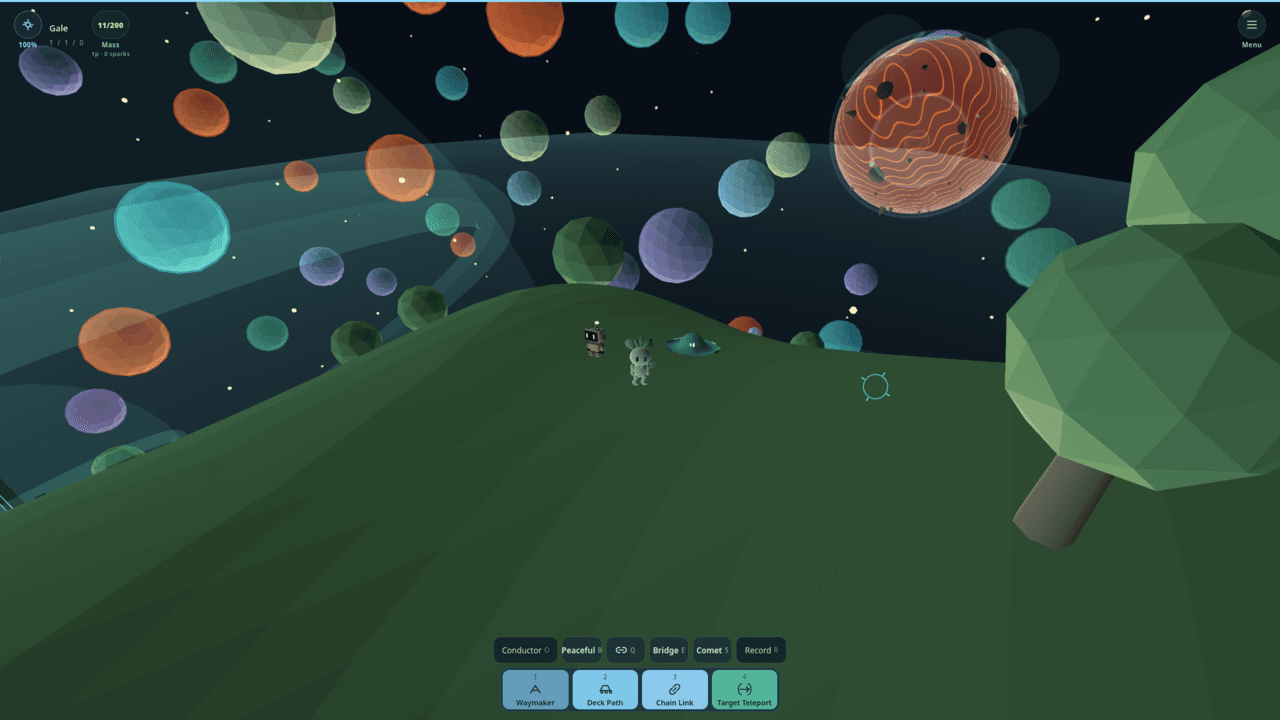
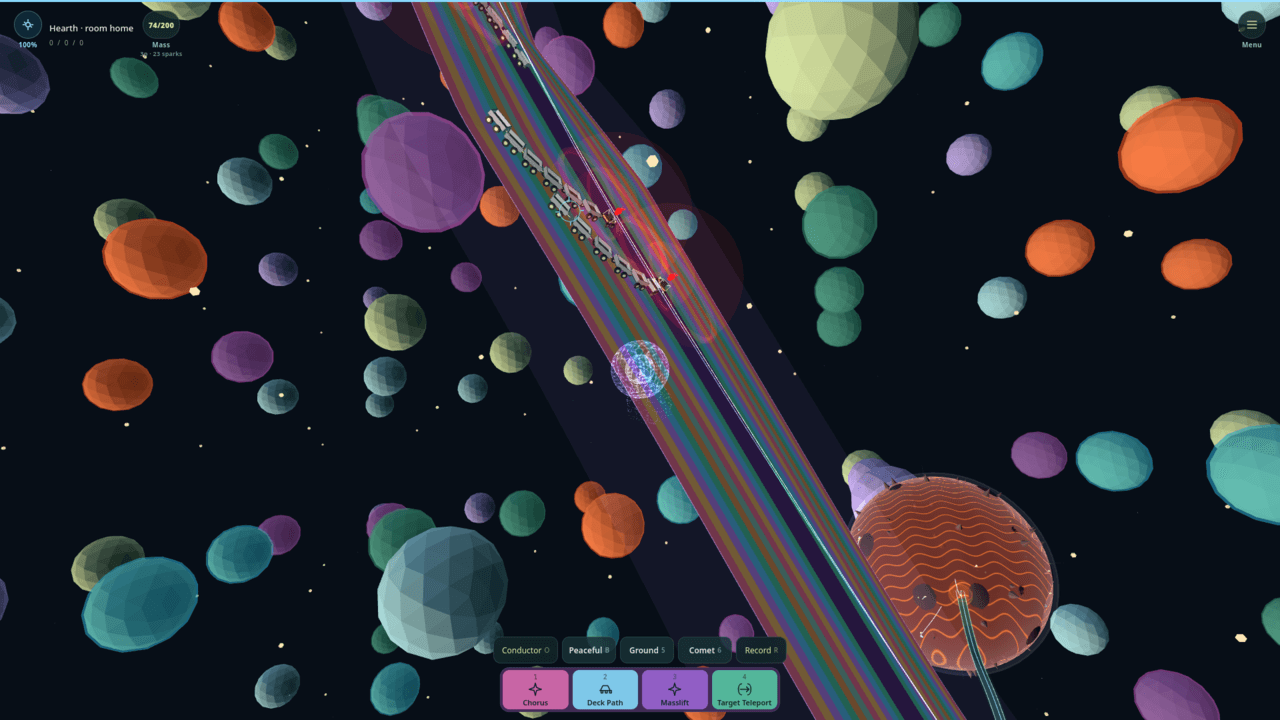
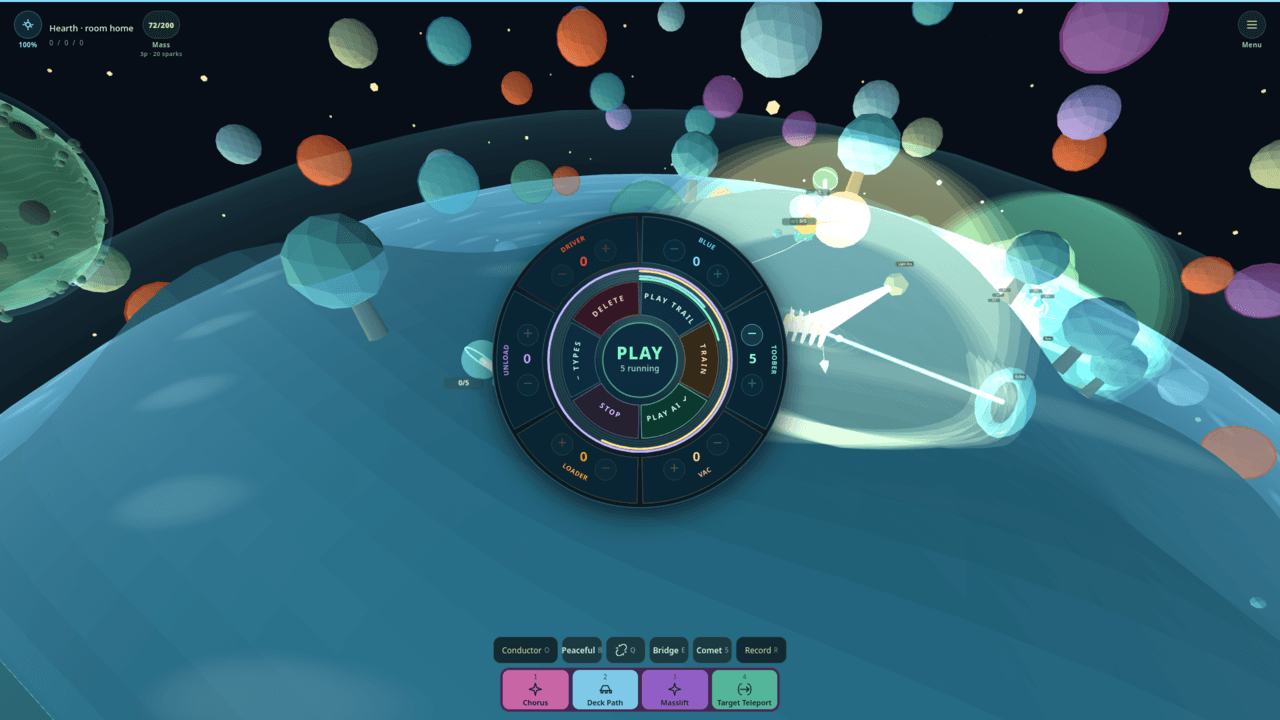
Explore tiny planets, gather resources and build paths between worlds. When a job needs repeating, show a little helper called a Spark what to do by walking the route yourself.
No scripts to write. Your actions become the lesson, then the physical world gets a chance to surprise you.
Under the hood, ALife uses TwinTrace: live memory that learns while you play, so Sparks can remember what you showed them without a cloud of saved history. Watch the TwinTrace breakdown Read the note
Coming soon on Steam for Windows, Linux and macOS, aiming for 2 November. Android and iOS also coming soon.
 View the full gallery
 THE BIG PICTURE
One vision. Three connected parts.
You do not need to know AI to understand
what we are building.
OpenFluke.
The independent practice asking what AI and artificial life could become. A place to build, test and follow an idea wherever it leads.
Meet the mind behind it COMING SOONALife: Becoming.
An exploration and building game of tiny planets, connected worlds and Sparks you teach through your own actions.
Explore the game 03 / THE ENGINEWelvet.
The AI engine underneath. Run and train on CPU, SIMD, WebGPU, optional Apple Metal, and Qualcomm Windows NPU, with the freedom to explore how it works on your own hardware.
Go under the surfaceNOT A STRAIGHT LINE. A CONNECTED JOURNEY.
Every experiment
brought us here.
From Primecraft and Biocraft to Birdkit and SoulGlitch, each project asked where a chaos simulation engine might fit. ALife OS was the prototype. ALife: Becoming is the actual game growing out of those experiments.
Alongside them, Paragon and Loom shaped the engine that became Welvet.
Follow the research journeyOPEN THE NOTEBOOK
The ideas. The code. The detail.
Start with a question.
Follow it all the way down.
83 chapters, from the big picture to the inner workings of the engine.
Read the book THE EXAMPLE LIBRARYSee what happens
when ideas run.
94 documented examples, with source code and recorded outputs to explore.
Browse examples RESEARCH & EXPLORATIONThe thinking behind
the next experiment.
Reports and research notes tracing the questions that shaped the work.
Explore the researchA FEW GOOD QUESTIONS
Let’s make it simple.
New here? Start here.
What is OpenFluke?+
OpenFluke is the independent AI and artificial-life research practice of Samuel Watson in Australia. It brings together the Welvet AI engine, ALife OS, the earlier prototype, and ALife: Becoming, the coming-soon game.
What is Welvet?+
Welvet is the AI engine underneath the work: software for running and training neural networks. Written in Go (v1.3), it explores different ways to store, calculate, and update models on CPU tiled, Plan 9 SIMD, and WebGPU. Optional NativeCPU routes FormatNone work through the welvet.cpp C ABI (linux/amd64) when you opt in. Optional BackendQNN routes Dense and related layers through Qualcomm Hexagon HTP on Windows ARM64 (Snapdragon X NPU) via nativeqnn + welvet.qnn. Optional nativemetal mounts layers on Apple Metal GPU via welvet.metal on Apple silicon macOS. The default remains Go CPU tiled. Paragon and Loom are earlier engine designs whose lessons continue in Welvet.
Does Welvet support Qualcomm Windows NPU acceleration?+
Yes, as of Welvet v1.2 / welvet.qnn 1.0.0. On Windows ARM64 with Snapdragon X (or similar), opt-in BackendQNN plus SyncToQNN / PrepareQNN can run supported layers on Qualcomm Hexagon HTP. It is never the Prefer default. Other OS/arch report unavailable. Published large-shape timings are in the Welvet book §81 and w2a go_v_qnn RESULTS.
Does Welvet support Apple Metal acceleration?+
Yes, as of Welvet v1.3 / welvet.metal 0.68. On Apple silicon macOS, opt-in nativemetal.Mount runs supported layers on the independent Metal GPU library with explicit train, SyncToGo, and JSON Go/C++/Metal routing. It is never the Prefer default and is not Apple Neural Engine. Book chapters §82–88 cover the API and captured Mamba results.
Where can I find the Welvet 1.3 deep research?+
On the Welvet page and in the research archive: the deep-dive PDF at files.openfluke.com/archive/welvet_1_3/Welvet_1.3_Update_Deep_Dive.pdf, the audio briefing How_Welvet_Trains_AI_On_Edge_Devices.mp3, and the YouTube explainer at youtube.com/watch?v=_JHZk1A-J6Q.
What is ALife: Becoming?+
A coming-soon exploration and building game where you visit tiny planets, gather resources, connect worlds, and teach Sparks by showing them what to do. It is planned for Windows, Linux, macOS, Android, and iOS.
What happened to ALife OS?+
ALife OS was the prototype. ALife: Becoming is the actual game that grew from it. The older design notebook is preserved as history, rather than a list of completed features.
How do you teach a Spark?+
Record a trail by doing the job yourself, then train a Spark to follow the route you demonstrated. The goal is useful automation that stays physical enough to produce surprising outcomes.
Is Becoming available now?+
Not yet. ALife: Becoming is coming soon to desktop and mobile. If you are interested in early access, email [email protected] and include your desired platform.
What happened to the earlier projects?+
Primecraft, Biocraft, Birdkit, and SoulGlitch explored different places and configurations for the chaos simulation engine. Those experiments and pivots led through the ALife OS prototype to ALife: Becoming. Paragon and Loom sit on the engine side of that history, leading into Welvet.
Do I need to understand AI to explore this work?+
No. Start with the game and engine overviews. The book and examples are there when you want the technical detail, including source code, recorded outputs, and the limitations documented in the original work.